
During the Spring 2025 semester at Rider University, I had the privilege of working on a group project for my Interactive Narrative class that not only expanded upon my storytelling capabilities but also pushed me out of my comfort zone. Before this assignment, I had no idea what an alternate reality game (ARG) entailed and had never participated in one before. Leading up to this project, the class was tasked to independently research an ARG on our own and analyze it to help aid us in creating our own for the class’s final assignment. Ultimately, I chose to examine the 2012 Skyfall Viral ARG, which served as promotional material for the James Bond movie titled Skyfall. Though this game was small compared to other popular ARGs, like the one used to promote Halo 2, I still absorbed some valuable strategies and tools to incorporate into my group’s project. I learned how essential it is for the puppet master to guide the players without breaking their immersion, and how to adapt on the fly to allow players’ creativity to shape their own stories while still supporting our overall narrative.
The main rules for our final assignment could be boiled down to a few things: the project must take place on campus during our designated class time of 6:30-9:30 p.m, there must be room for branching paths within the overarching story, and there should be a way to enter the game without the players knowing it’s a game (this was more difficult as suspension of disbelief was required since we all knew we were playing each other’s games). There were some other rules too, but these were the three big ones in my opinion. The class was split into about four groups, with each group consisting of roughly four to five students.
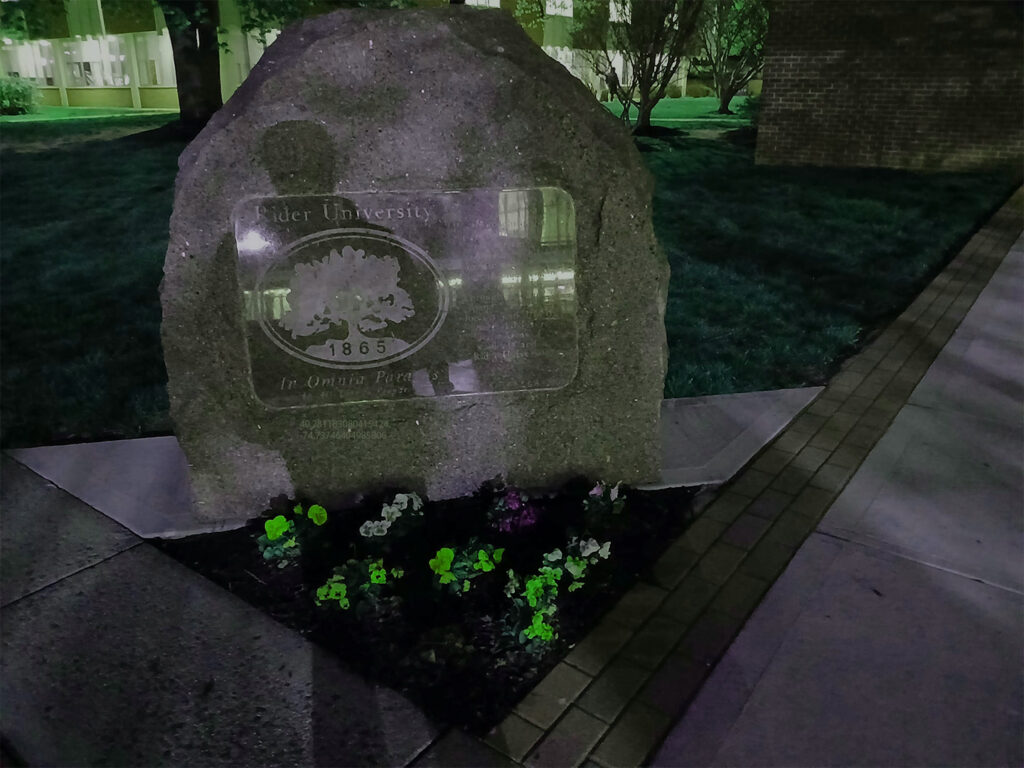
For our story, we decided to take full advantage of our class being at night and go with a creepy route inspired by horror games like Silent Hill. The ‘puppet master’ secretly took photos of the students as they solved clues, creating an eerie atmosphere and a sense of being watched. Our narrative unfolded across a couple of different mediums and platforms ranging from a physical poster linking to a Discord server to an Instagram account featuring a mysterious picture of the famous Rider Rock taken at night, with a shadow of a man appearing on the iconic stone. Both the poster and the Instagram page served as the rabbit hole for players to begin participating in the alternate reality game, with each of us in the group taking turns serving as the puppet master.
My role during the final project was to send the ciphers I created in the Discord channel as the players reached the specific locations found when decoding these intricate puzzles. Hints were sent to the players via Discord by our awesome professor who was a part of the story, vanishing from the group after the first destination and pretending to be kidnapped. When players were struggling to solve the clues, another student and I would send him tips to provide in the server to help the students reach the correct answers (though the other student worked more on that than I did). A basket with an eye symbol was hidden at each of the three sites to help the players realize they were on the right track. My role within this elaborate project was to create/send the ciphers, and take pictures at night of the three locations on campus that we planned on utilizing and hide the coordinates of the actual destinations the players were supposed to head to within each image. I accomplished this by using Photoshop to really try and sneakily have the numbers blend into the pictures. It’s important to note as well that I created backup images and ciphers that led to alternate locations in case it rained that day as instructed by our professor. Luckily, it didn’t rain and we were able to go ahead with our ARG as intended!
The narrative started in the game lab of Rider’s Fine Arts building. My one groupmate taped a missing ID poster on the wall, with a Discord invite link clearly visible on the flyer to direct people to head to the platform for the next clue. From there, players were directed to an Instagram page with a picture of the Rider Rock (pictures and ciphers will be posted below) on display, with hidden coordinates pointing to the Science Building. Instead of analyzing the photograph, the players went straight to the Rider Rock and searched for clues. Since this was the wrong location, we had our professor, who was with us, ‘find’ the hidden coordinates and direct everyone to the Science Building. Additionally, our antagonist, a ‘disgruntled’ game design student, was tasked with sending an angry message in Discord. While walking to the destination, one of my groupmates snapped a photo of the students and posted it cryptically to the Discord server using the nickname “Unknown User.” She continued to do this throughout the game, which definitely helped make the atmosphere even creepier.
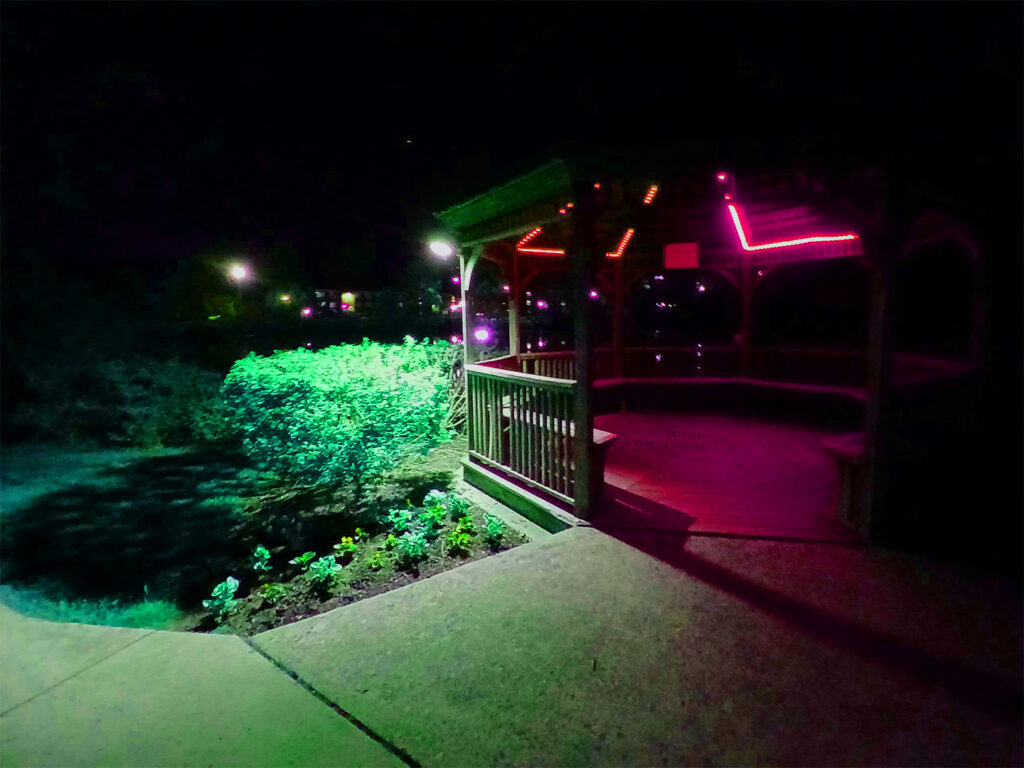
I sent the first cipher in the server as everyone reached the Science Building to distract the players from seeing our professor hang back and “disappear”. While the players solved the puzzle, we had our professor send a coded ‘help’ message in Discord, officially raising the stakes of the game and giving them a new objective. Rather than just finding a missing ID, the players now had to find our game design professor as well. After the first cipher was solved (it led to the second floor of the Science Building where a basket marked with an eye symbol was waiting eerily, containing a copy of the missing ID poster), the players were directed back to the Instagram page, with a new picture of the gazebo in front of the Rider Lake posted. This photo once again contained coordinates that were hidden within the image. The players decided to go to the gazebo first, with a clue from our “missing” professor needing to be used to direct them to the Business Building. Once there, I sent a new cipher which led the players to the second floor of the building where another basket was patiently waiting for them (this puzzle took the longest of the three to solve).
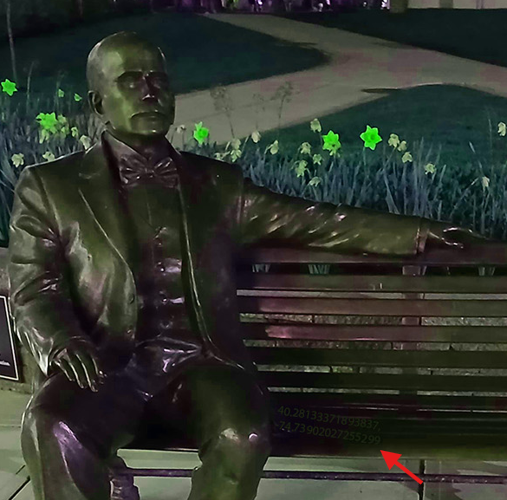
A new post on Instagram was uploaded after the players reached the second basket, this time the image featured the famous Bart Luedeke statue proudly displayed in front of the Bart Luedeke Center. The players found the hidden coordinates this time and were directed back to the Fine Arts Building, where the final cipher was sent to the Discord server. This puzzle was solved fairly quickly and led the students to our professor’s office. Once there, the players knocked on the door and entered. Our professor greeted them by jumping out from under his desk in the dark, giving everyone a good scare. Inside his office, the players found the missing ID as well, and discovered that the person behind the entire mystery was a fellow classmate of ours (in the story the student ended up being a ‘disgruntled’ game design student).
Overall, I’d say our ARG was successful. The players seemed engaged and genuinely enjoyed the story, the ciphers weren’t too easy to solve, and the poster and Instagram pages added to our game’s authenticity. Looking back, I could have made the hidden coordinates in the images a little larger and easier to spot as it was difficult to read the numbers on everyone’s phones (I had looked at them on the computer and could read them and didn’t account for the change on mobile devices). Additionally, I could have tried to make the second cipher a little easier to solve as it seemed to really stump the players. I think our branching paths worked well though, when players went the literal route and took the destination featured in the images, we had our ‘disgruntled’ game design student send an angry and cryptic message in the Discord server to try and get them to look closer at the pictures. If the players didn’t take the obvious path, they would never have seen the angrier side of the antagonist in our story.
Check out the images and ciphers below to get a feel for the project and become immersed in our story!
Images:
Location 1 (Rider Rock with coordinates to the Science Building. The image was put into Photoshop to add the coordinates and adjust the contrast):
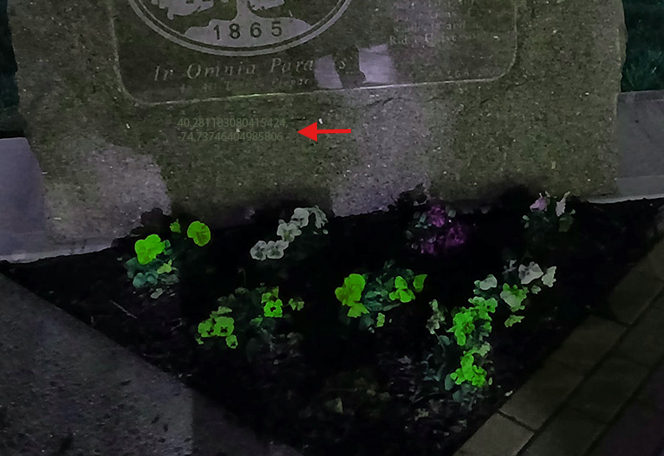
Closeup of embedded coordinates:
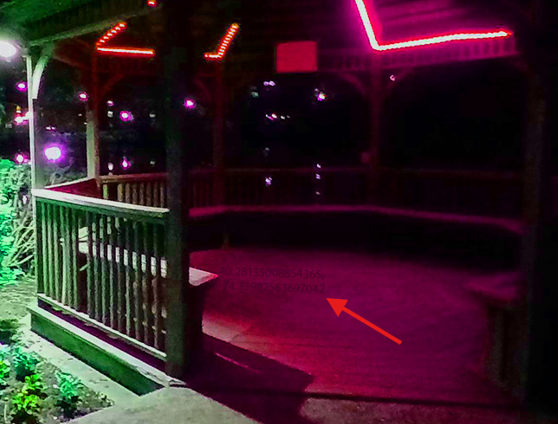
Location 2 (Gazebo in front of the Rider Lake with coordinates to the Business Building. The image was put into Photoshop to add the coordinates and adjust the contrast):
Closeup of embedded coordinates:
Location 3 (iconic statue in front of the Bart Luedeke Center, edited in Photoshop to add coordinates to the Fine Arts Building and adjust the contrast):
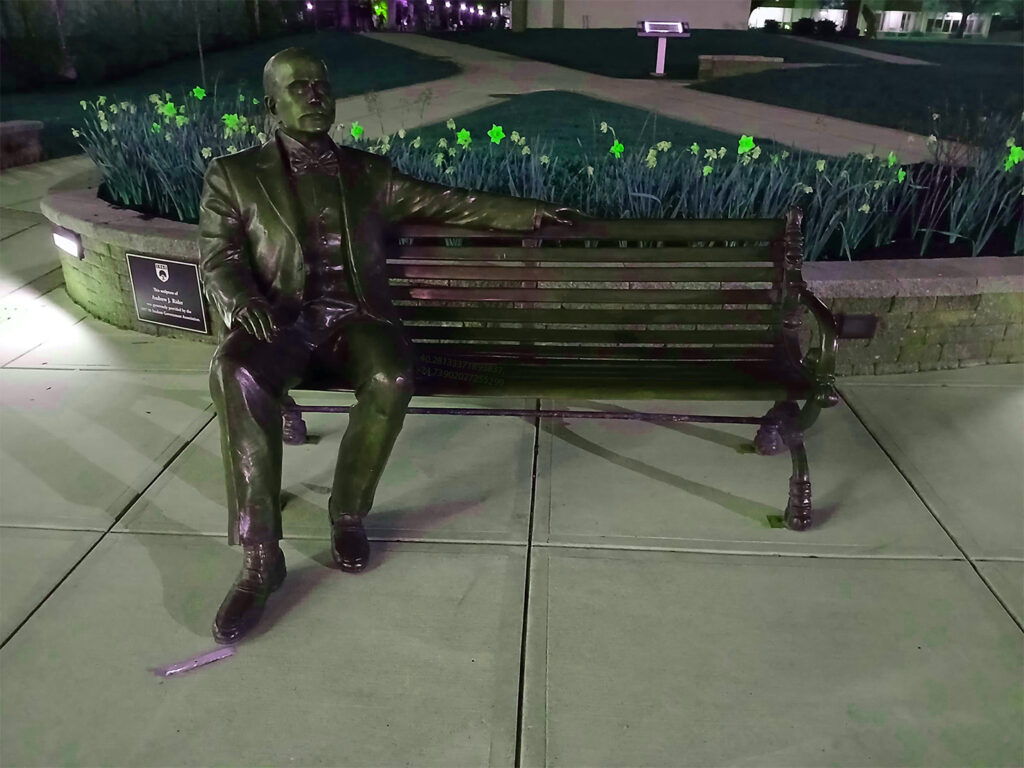
Closeup of embedded coordinates:
Ciphers:
Cipher 1 (made using Illustrator):
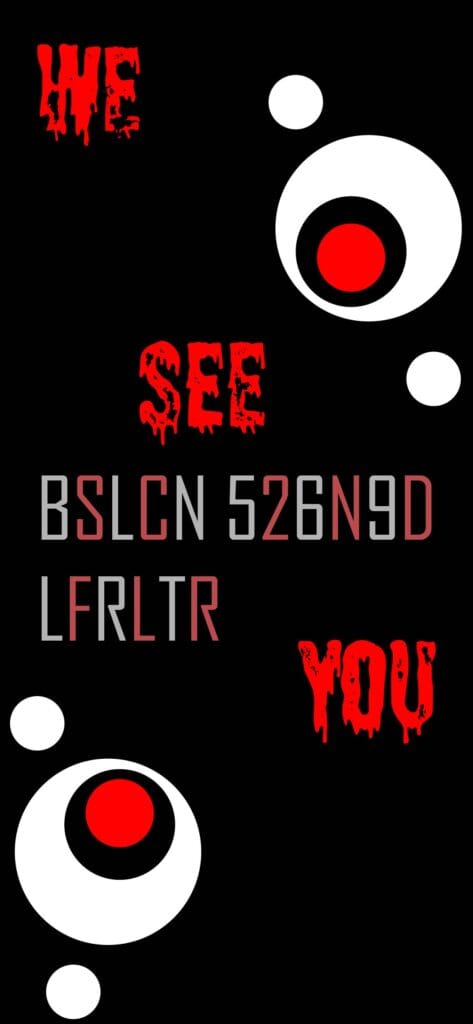
To decode this cipher, just combine the characters written in cranberry. When you do, you’ll get the code ‘SC 2nd FLR,’ meaning the Science Building (with ‘SC’ as its shorthand) and the second floor.
Cipher 2 (made using Illustrator):
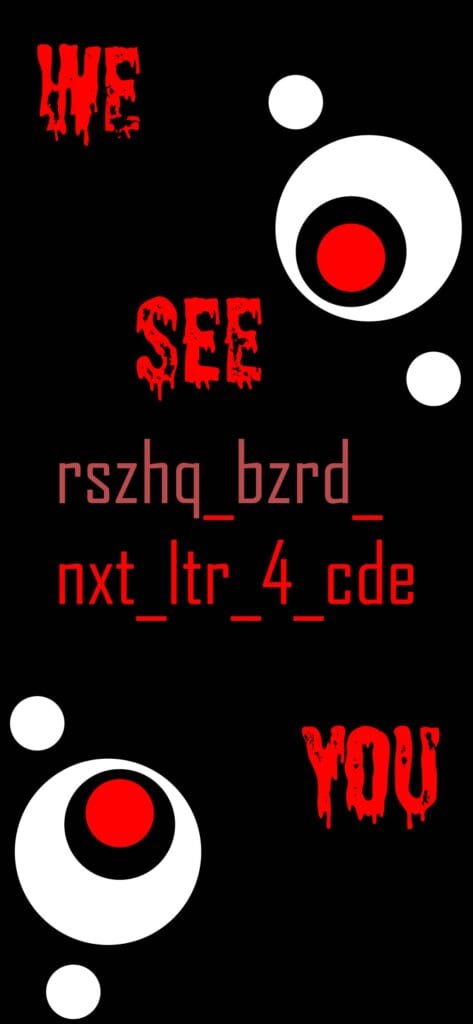
To decode this cipher, start with the red text that reads ‘nxt_ltr_4_cde’ (shorthand for ‘next_letter_for _code’). Then, take each cranberry-colored letter and shift it forward one letter in the alphabet. Once decoded, ‘rszhq_bzrd’ becomes ‘stair_case’, signaling the players to head to the second floor of the Business Building (the location where the coordinates in the second image leads to).
Cipher 3 (made using Illustrator)
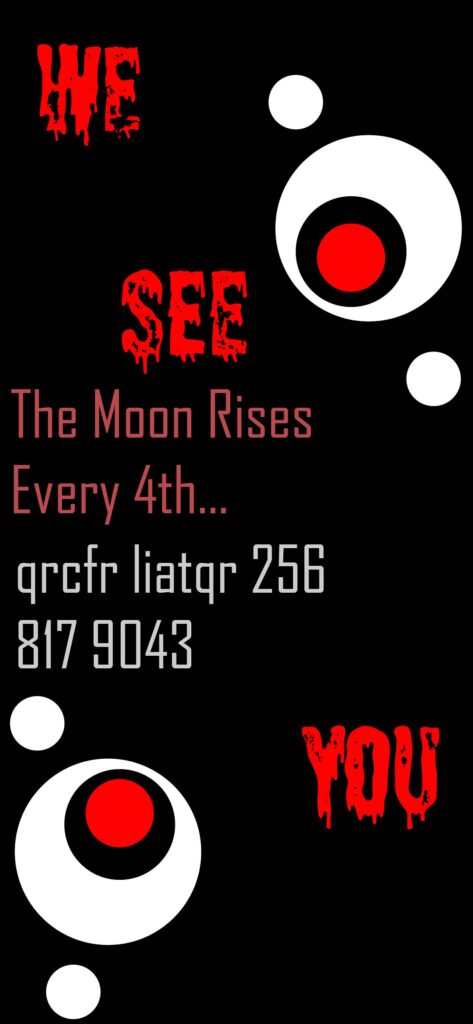
To decode this cipher, read the cranberry-colored text: ‘The Moon Rises Every 4th…” Then, take every fourth character from the grey-colored text. This reveals the code ‘fa214’, shorthand for FA (the Fine Arts Building) and room 214.